October 28, 2026
The Rise of Modern Handleless Kitchens: Clean Lines and Practical Design
By @modernhandlelesskitchensworks
When I first started working with kitchen design in Glasgow, handleless cabinets were a niche choice, something you saw in glossy German brochures but rarely in a real home. That has changed. Over the past decade, modern handleless kitchens have moved from a specialist preference to a mainstream option, and for good reason. They offer a cleaner look, easier maintenance, and a sense of openness that suits the way we live now.
The shift is not just about aesthetics. It reflects a deeper change in how we use our kitchens. The old model of a separate cooking room with wall cabinets and visible handles belongs to a different era. Today, the kitchen is part of the living space. It needs to flow, to feel calm, and to hide the clutter of daily life. That is where handleless design excels.
What Makes a Kitchen Handleless?
A handleless kitchen does not mean no way to open the doors. It means the mechanism is integrated. There are several systems: a recessed groove behind the door edge, a push-to-open mechanism, or a metal rail that runs along the base of the upper cabinets. Each has its own feel. The groove system, often used by brands like Siematic, gives a very clean front. The push-to-open, common in Poggenpohl designs, relies on a spring mechanism and works well for a seamless look. The rail system is practical for taller cabinets and is often seen in Bulthaup kitchens.
In my experience, the choice between these systems depends on the user. If you have young children, push-to-open can be frustrating because it needs a firm press. The groove system, by contrast, is intuitive and works with a light pull. But it does collect dust in the recess. These are real trade-offs, and a good design consultation will work through them with you.
Why Handleless Works in Open-Plan Living
Glasgow homes, like many across the UK, have embraced open-plan living. Knocking through the wall between the kitchen and the dining room is now standard. In that kind of space, the kitchen is not a room you close off. It is a piece of furniture in the middle of your home. Handles on every door break the visual flow. They catch the eye and create a busy, cluttered look. Without them, the room feels larger and more restful.
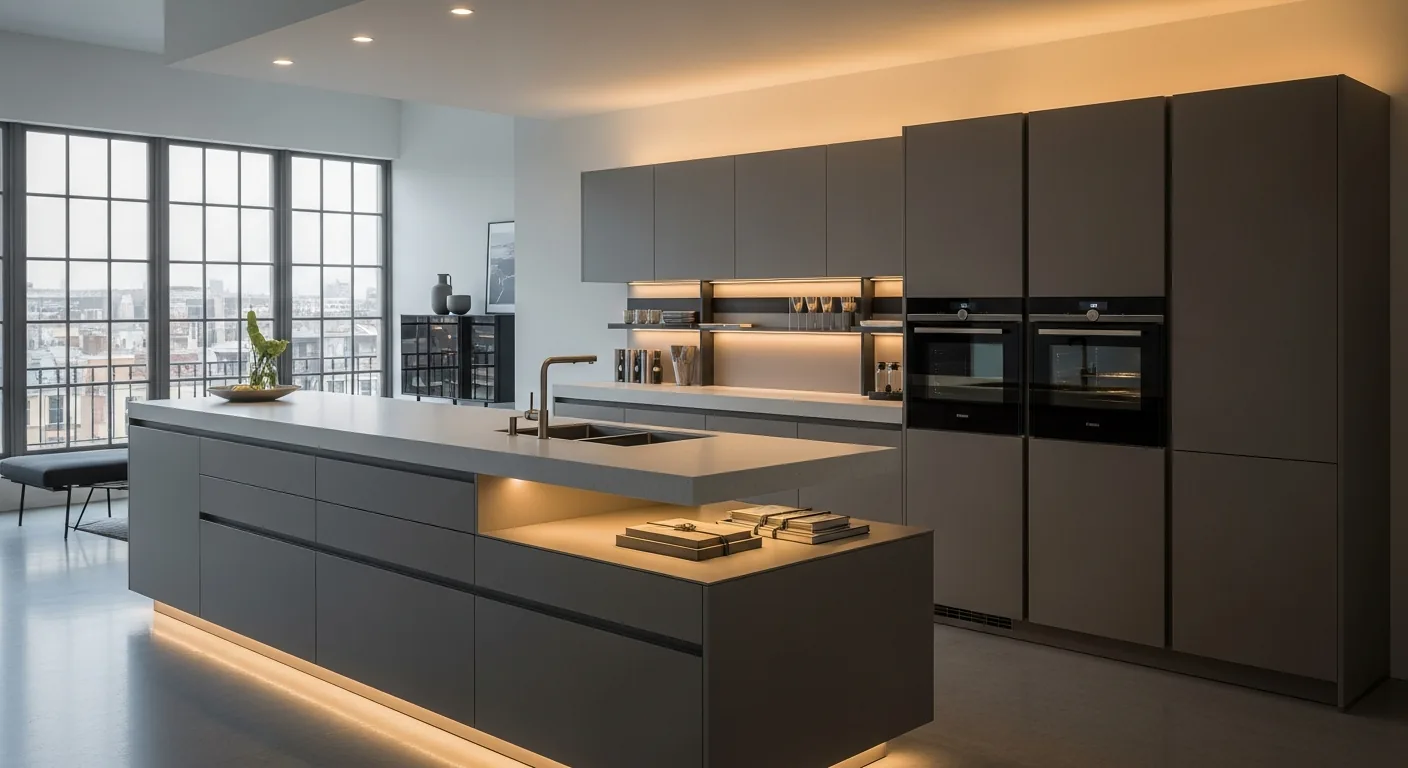
A kitchen island in a handleless design becomes a sculptural object. You can use it as a breakfast bar, a prep station, or a place for the kids to do homework. The clean lines mean it does not compete with other elements in the room. Pair it with ambient lighting under the cabinets or inside the glass-fronted units, and you have a space that feels both modern and welcoming.
This is where modern handleless kitchens really shine. They allow the architecture and the materials to do the talking. A quartz worktop, for example, becomes a statement surface. The lack of handles means your eye goes straight to the stone, the grain, the colour. It is a minimalist approach that rewards careful material selection.
The Role of German Engineering and British Craftsmanship
One of the reasons handleless kitchens have become so popular is the quality of the engineering behind them. German brands like Poggenpohl and Siematic have been refining their cabinet systems for decades. The soft-close hinges, the precision of the push-to-open mechanisms, the durability of the lacquer finishes - all of these matter. A cheap handleless kitchen can feel flimsy because the gaps between doors are uneven and the mechanisms stick. A well-made one feels solid and silent.
That said, British craftsmanship brings something different. Bespoke kitchens built here often use more traditional joinery techniques. The carcasses are sturdier, the fitting is more tailored to the room. When you combine British craftsmanship with German engineering, you get a kitchen that has both the precision of a machine and the soul of a handmade piece. It is a blend I have seen work beautifully in projects across Glasgow.
Integrated Appliances and the Hidden Kitchen
A handleless design naturally leads to the idea of integrated appliances. If you are hiding the handles, why not hide the fridge and the oven too? Brands like Sub-Zero and Wolf make appliances that are designed to be fitted behind cabinet panels. Your refrigerator becomes a tall panel of lacquer or wood. Your dishwasher disappears behind a door that matches the rest of the run. The result is a kitchen that looks more like a piece of joinery than a collection of machines.
This approach has practical benefits. It makes the kitchen easier to clean because there are fewer crevices and protrusions. It also adds value to a home. Many buyers in Glasgow now expect a kitchen to look seamless. A handleless design with integrated appliances is seen as a premium feature.
But there is a trade-off. Integrated appliances can be more expensive to repair. If the panel on your Sub-Zero fridge gets damaged, it is not a simple swap. You need the exact same finish. And the panel itself can cost as much as a standalone appliance. So it is worth thinking about how long you plan to stay in the house and whether you are willing to accept that risk for the look.
Materials Matter: Lacquer, Quartz, and Beyond
In a handleless kitchen, the material of the cabinet front becomes the focal point. There is no handle to distract you. Lacquer finishes are a popular choice because they reflect light and give a very smooth surface. High-gloss lacquer, in particular, makes a small kitchen feel larger. Matte lacquer is more forgiving of fingerprints and gives a softer look.
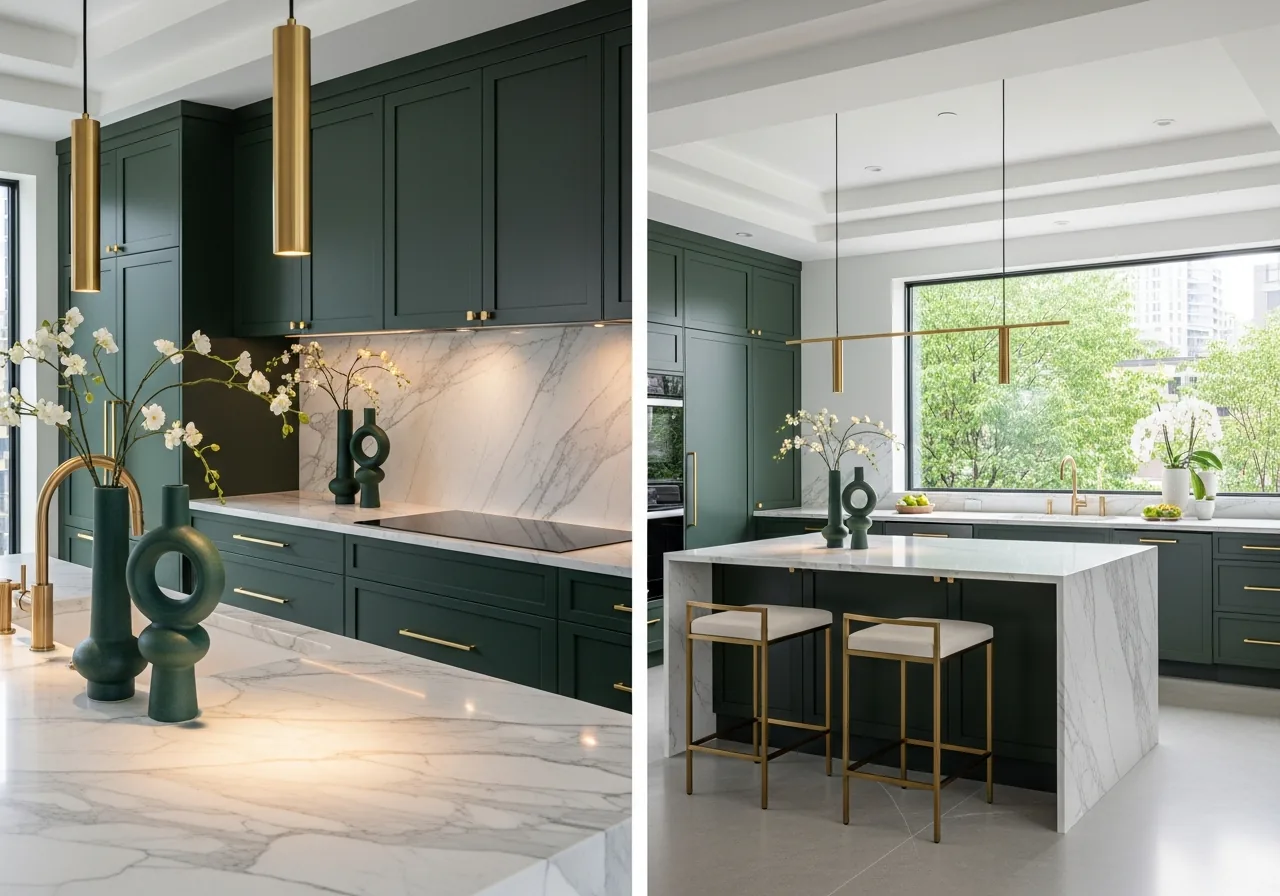
Quartz worktops are a natural partner to handleless cabinets. They are durable, non-porous, and come in a wide range of colours. A white quartz worktop against a matte grey lacquer cabinet creates a clean, clinical look that many people love. But it can feel cold. A warm wood worktop, like oak, brings back some softness. The key is to balance the materials so the kitchen does not feel like a laboratory.
I have seen kitchens where the owner chose a dark, almost black lacquer for the cabinets and a pale quartz for the island. The contrast is striking. Without handles, the dark run of cabinets recedes into the wall, and the island floats in the space. It is a clever use of colour and form.
Practicality and Maintenance
One of the most common questions I hear is about fingerprints. On a glossy lacquer front, fingerprints show. On a matte finish, they are less visible. The push-to-open mechanism also means you are pressing the door rather than pulling it, which can leave marks over time. A good coating or a laminate surface can help. Some brands offer anti-fingerprint finishes. It is worth asking about during a design consultation.
Cleaning a handleless kitchen is easier in one way: no handles to wipe around. But the grooves in a J-pull system can collect crumbs and dust. You need a soft brush or a vacuum attachment to keep them clean. It is a small task, but it is real. If you hate cleaning, a flat-front push-to-open system might be better for you.
The soft-close hinges on quality cabinets mean the doors close silently and do not slam. That is a small luxury that you notice every day. It is one of those details that makes a kitchen feel well-made. Combined with the absence of handles, it creates a space that is calm and controlled.
The Future of Kitchen Design in Glasgow and Beyond
I expect modern handleless kitchens to remain popular for the next decade at least. The trend is not a fad. It responds to real needs: more open space, less visual clutter, and a desire for quality over quantity. As homes get smaller in cities like Glasgow, every square metre matters. A handleless design makes a room feel bigger without actually adding space.
There is also a growing interest in sustainability. Bespoke kitchens built with durable materials last longer than flat-pack alternatives. A well-made handleless kitchen from a brand like Bulthaup or Poggenpohl can last thirty years. You can change the worktop or the appliances and keep the cabinet structure. That is a more sustainable approach than replacing the whole kitchen every ten years.
If you are considering a new kitchen, I would recommend visiting a showroom and trying the different handleless systems. Pull a groove door. Press a push-to-open panel. See which feels natural to you. A design consultation will help you match the system to your lifestyle. And do not forget the lighting. Ambient lighting under the cabinets or inside the glass units can transform the look of a handleless kitchen at night.
In the end, the best kitchen is the one that works for you. But if you value clean lines, easy maintenance, and a space that feels open and calm, modern handleless kitchens are worth serious consideration. They are not just a style choice. They are a practical response to how we live today.
❧